



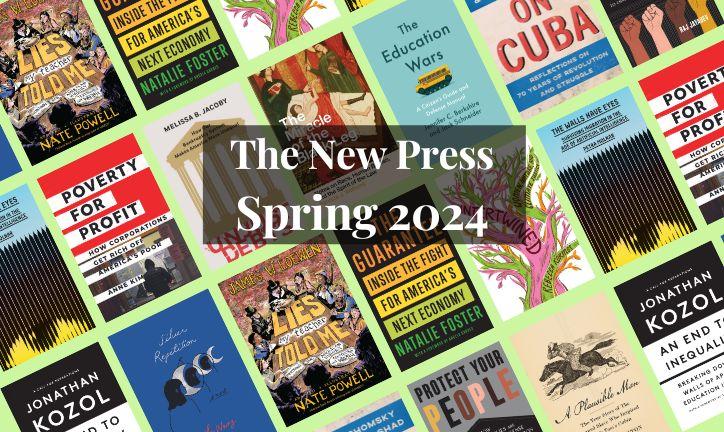



For more than thirty years, The New Press has published books that facilitate social change, enrich public discourse, and defend democratic values. The New Press has now joined other First Amendment advocates in urging the 11th Circuit Court of Appeals to uphold a block on Florida's controversial Stop W.O.K.E. Act by filing an amicus brief with court.
The New Press amplifies progressive voices for a more inclusive, just, and equitable world. As a nonprofit public-interest publisher, we leverage books, diverse voices, and media engagement to facilitate social change, enrich public discourse, and defend democratic values:
The New Press relies heavily on the help of its paid interns, treating them in many respects the way assistants are treated at other publishing houses and nonprofits. This means far greater exposure to interesting work than is normally afforded interns; it also calls for a degree of responsibility that is significantly greater than at most internships. Our New York office is large and efficient enough to offer a wide spectrum of experience, but small and casual enough for you to form intimate and lasting bonds with the staff.